No matter your training and role in knowledge work, most of us will now publicly acknowledge we are confronted with a choice: augment or be replaced. We have an identity around our training, our actions, and our title. Augmentation, to survive, is more than doing “your job the way you did it before, but faster”.
—
Instead of disclaimer, I offer you a preamble and a human prompt so you may cope my writing. The grammar will be sub optimal. The style and transitions will be jarring. It is artisan. Enjoy the roughly hewn lumber, the uneven amount of chocolate chips in a cookie, and the sub-genius black and white movie pace I am capable of. With sincere respect, I suggest you may paste this into an LLM if helpful. I will not use an LLM today. I love them. They have their place.
—
At an extreme, capitalism may only have VCs. Deploy the capital and autonomous companies are formed and make money for the holder of cash, for whatever reason they deserve the power. The CEO is automated. The mission statement, the nurturing of culture, the “day-to-day” are all manifested and motivated by the lifting of a finger, a subtle wisp of movement, from a VC of the future. Entrepreneurship is the only job. Otherwise, bake bread for fun on a shameless life on UBI.
Or.
Be a CEO.
Optimization for wealth creation is a bleak future without culture and hope. A CEO does more than capital creation, in my biased opinion; maybe creates a vision, with care for a team, accountable to profit but doesn’t matter if the market don’t want what you make. You can be attacked and undermined from within and without. You are accountable. You own a culture.
Like a CEO, you are the limit. If you have never managed a fleet of AI agents running on GPT 5 or Claude 4.5 or later, (and they aren’t plugged into a tool or generating code), then you may not have experienced this feeling. How much you empower your team, your ambition, your judgement, your ability. Like a CEO, I need to think for hours, carefully, before I *should* tell my team of agents what to do. They will be done in minutes. I take hours. I am the CEO. My slow, deliberate, human pace matters because I am human.
Teams of CEOs, aligning their “companies” is the company of the future. You can’t perfect your CSS or your C++, you already lost. You can’t spreadsheet better or out-math your teammates. You have a team of A players at your disposal. You aren’t an IC any more. However, you are not only a manager now, you are a CEO. I understand you may not want to be a frontend development CEO. I understand if the prospect of churning out 100x of what you already do might not be right for you or the company.
Meanwhile, climate change, biodiversity, disease, science, nationalism, health care and other meat-puppet problems await solving. We learn to ignore many things, like death, for our mental health, as long as we can. Don’t look away. Surely, there is something worth being a CEO of.
Uncategorized
Boat, not moat.
To create a survivable business, the metaphor of the defensible “moat” will be outdated as the land shifts beneath us. The water is rising. Your company doesn’t need a moat, it needs a boat. The forces of the ocean will be much stronger than most businesses in traditional knowledge work and SaaS will be able to withstand.
More bluntly, anything built in software or any knowledge work can be replicated and commodified. Brand, unique data, and deep tech all can differentiate for a while, until both AI slop and sharper tools generated by AI are overwhelming.
Any new startup will rely on AI, but since AI is not static, we will all float on a changing sea. What is builder’s place in that world?
While this is scary to be unmoored, we are free from dank, cold castles that may have imprisoned us. The essence of the human experience and relationships, however you define this, will continue to be in demand. We want safety, we want connection, we want entertainment – and we will expect more. We don’t want complex taxes, medical failures and large bills, government shutdowns, or boring and expensive education. We don’t want bureaucracy, at least if it gets in our way.
Adopting as much AI as possible is the only rational path for a business. You competing against AI, you are being challenged to build a floating vessel. A boat has many attributes, but the most important is the boundary between the ocean and the interior. Focus on the engineered shape of your boundary to float, not a wall impervious to enemies. Be ready to catch wind and waves, or dip below them. You will not hold land, but live on a shifting sea. Your state of mind and the state of your vessel matter more than your ambition.
Build a great boat. Help others build boats.

It’s not a vibe, it’s a trip
Vibe coding is not a the right phrasing for me.
I find myself quite productive these days. My shortcomings may be glossed over by AI, allowing me to be unblocked in situations where I am otherwise mired in complexity and emotion. For me this isn’t a vibe shift, it’s an acceleration into mind expanding realms.
While before I was constrained by my shortcomings and lack of joy at Googling for obscure bug fixes, now I find myself blasting through. For better or worse, my intent and vision become real in record time, and I can focus on sharing and articulating the goals of the software rather than proving that software can work if only I had more time.
For now, it makes more room for engineers to ask why they are doing something. This is very positive. However, I also notice I can exhaust myself after 4 hours of going at the speed of LLMs. LLMs now out-pace me. I review the code, I test the functionality. In some ways I am in the way. In other ways, I AM the way. This makes my neural pathway a highway for the LLMs to run through, and I can get tired. I don’t see this slowing down, wonder what level of abstraction I will be working at in a few years.
So excited to be using LLMs every day. I feel like a young wizard, learning to use spells wisely.
GPT Mouse
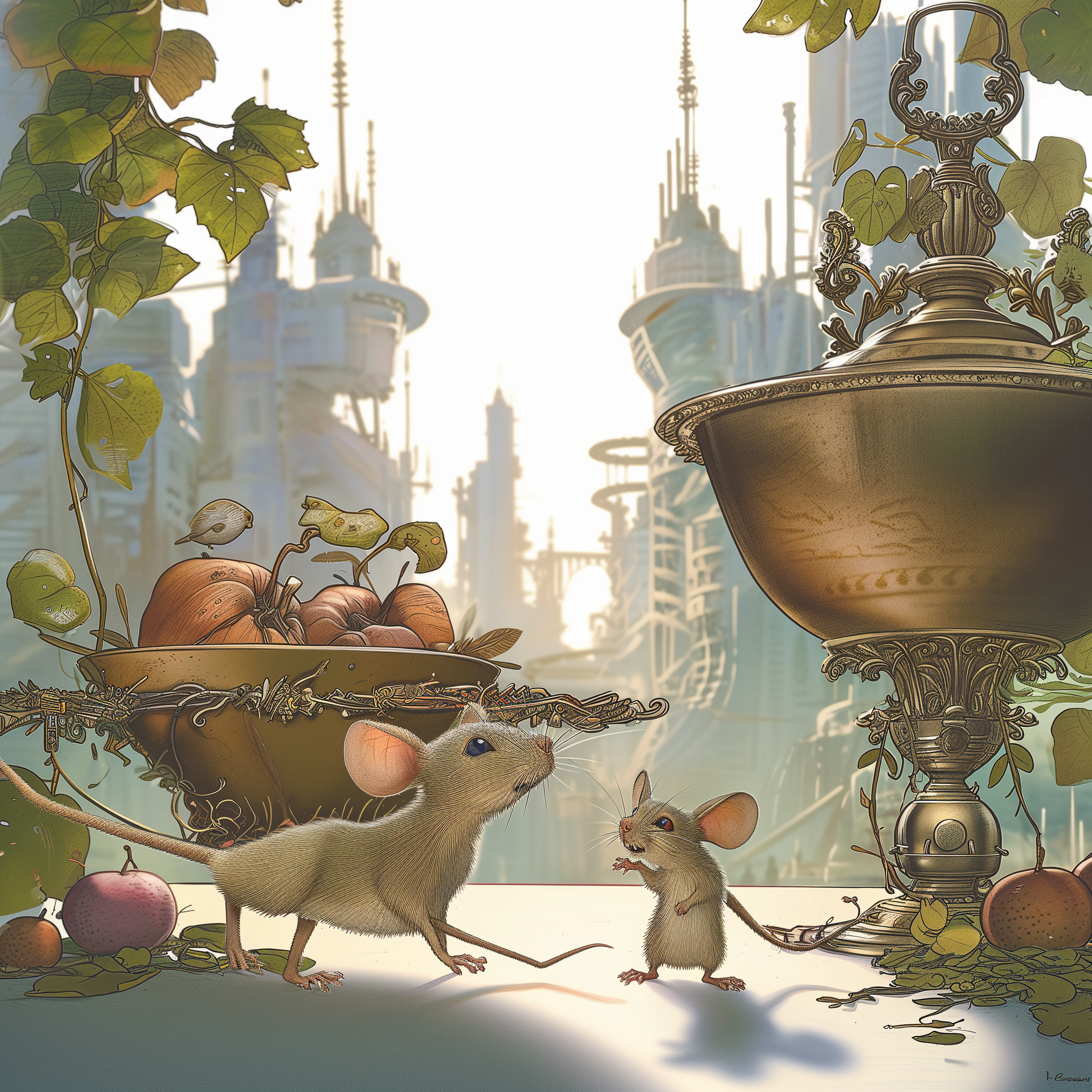
In an era where the marvels of Artificial General Intelligence (AGI) had redefined the boundaries of possibility, there lived two mice, each a testament to the divergent paths of fortune and fancy. The City Mouse resided in a domain where technology and opulence melded into a dazzling tableau, while the Country Mouse dwelled in the gentle embrace of a timeless pastoral idyll.
In the heart of the city, the home of the City Mouse was a spectacle of grandeur. The dining chamber was a cornucopia of gastronomic delights, arrayed with dishes that would make a connoisseur’s heart leap. Here, molecular gastronomy created cheese that sang with the flavors of distant lands, and pastries that dissolved into symphonies of sweetness on the tongue. Jellies shimmered like precious gems, each a burst of perfected taste crafted by the genius of AGI.
For entertainment, the City Mouse had at his disposal virtual realms where fantasies became indistinguishable from reality. He journeyed through digital landscapes where he could scamper alongside legendary heroes of mouse folklore, or partake in banquets rivaling those of mouse kings of yore. In these realms, every adventure, every thrill was but a thought away, bound only by the limits of imagination.
In matters of health and longevity, the City Mouse was graced with the elixirs of life itself. AGI-driven medicine provided not only cure but prevention, a shield against the ravages of time and disease. His body, rejuvenated by cellular repair technologies, was a testament to the age of amortality, a life where the ticking of the clock held no sway.
In the realm of education and science, the City Mouse had access to the sum of mouse knowledge. Libraries of information were available in an instant, offering wisdom spanning from the intricacies of cheese aging to the mysteries of the cosmos. His mind, ever hungry for knowledge, feasted on these intellectual banquets, each morsel of information a jewel of enlightenment.
In stark contrast, the Country Mouse’s world was one of natural splendor. His meals, though simple, were the gifts of the earth – grains and seeds rich with the taste of the sun and the soil. His entertainment lay in the real adventures of the fields and woods, the joy of a moonlit dance on the dew-laden grass, the thrill of a scrample under the starry sky.
When the Country Mouse visited his city cousin, he was awestruck by the lavishness and the seemingly infinite possibilities. Yet, amidst this splendor, he felt a longing for the unfettered joys of his rustic home. As he prepared to depart, the City Mouse imparted a final insight: “In this age of AGI, we can shape our world to our heart’s desire. You too can embrace the wonders of this new era while holding true to the simplicity you cherish.”
With this newfound understanding, the two mice bid farewell, each returning to their chosen world – one adorned with the fruits of technological mastery, the other basking in the timeless beauty of nature. Both, in their own way, were a testament to the diverse wonders of a world transformed by the magic of Artificial General Intelligence.
What is Social Health?
“We now face the danger, which in the past has been the most destructive to the humans: Success, plenty, comfort, and ever-increasing leisure. No dynamic people has ever survived these dangers” – John Steinbeck
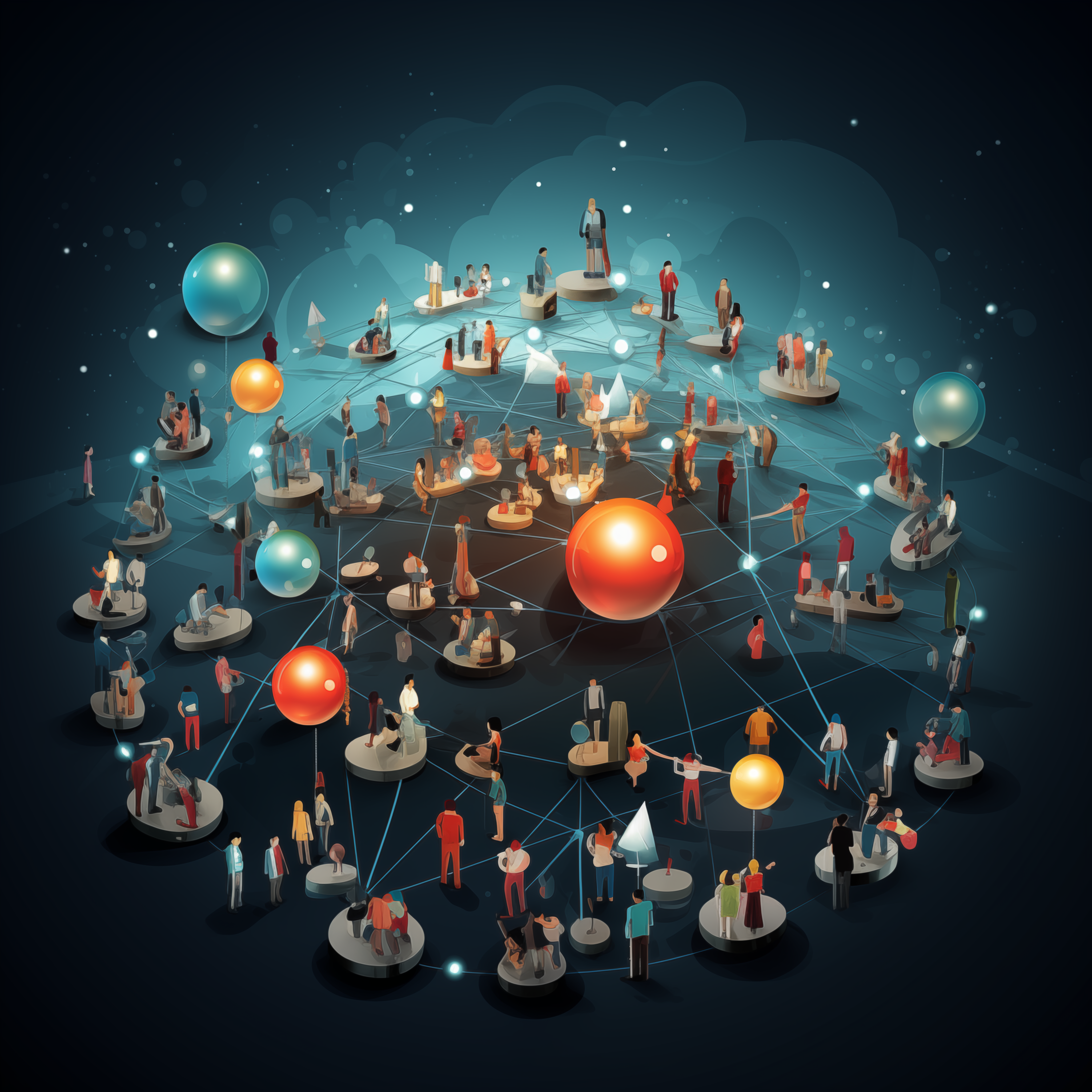
Social networks and other internet communication has complex and distorted incentives. To use a term from political philosophy, consumer internet creates our modern “social fabric”.1 The patterns of the fabric are based on market forces that serve human nature, but not always human needs. Content creators know that triggering a fear response, like outrage, is a very effective engagement strategy.2 Polarization creates toxicity and is already weaponized.
AI will amplify everything. For better or worse, to express something to AI may allow us to see it in the world.3
Social health is the measurement of social fabric over time. Social health is not only the connection between individuals, but also can be broadly observed in the effectiveness and trustworthiness of our institutions. Also, it is the commitment to ourselves and our identities when interacting with social constructs.
Social health is my answer to the name of this website – “What is Progress?”
On the side, I’ve playing with ideas for HAI.AI for about 10 years, and ideas around AI to resolve conflict for 20 years. In the abstract, the function of HAI.AI is to generate and maintain “good” interpersonal commitments. 4
Like many dedicating their careers to change, I’ve worked at startups in education technology, mental health care, and environmental air quality data. We built new technologies and experiences from scratch. We validated the efficacy. The primary challenge was the effectiveness of the institutions we connect with and rely on. How do you sell to an institution that can’t function sufficiently? Institutions with good people that do a good work; but inside and out, no one is as happy or as effective as they could be. We understandably want to keep our jobs and our identity, but change is constant.
I am biased, perhaps beyond repair, but like many founders I’ve come to believe we need new institutions for large, critical human services. The bigger the institution the bigger the disruption needed. AI will bring that disruption, but AI will also produce an arms race. To be generous, we are just starting to understand what new challenges will come. Meanwhile, we must build what we will be fighting for.
Sign up on the waitlist at https://hai.ai or reach out if you want to help.
– Jonathan
- The term “social fabric” is often used in discussions of social and political philosophy to describe the interconnectedness and interdependence of individuals within a society. Several prominent political philosophers and theorists have referenced or discussed concepts akin to the “social fabric.”
Some of these include:
Jean-Jacques Rousseau: In his works like “The Social Contract,” Rousseau discusses the collective social arrangement as a contract between individuals and the community, highlighting the interdependence of members in a society.
John Locke: Locke, in his theories about social contract and civil society, implicitly refers to the idea of social fabric through his emphasis on the importance of social relations and community for the protection of individual rights.
Karl Marx: Marx’s critique of capitalist society and his vision of communism inherently address the nature of social relationships and the fabric of society, particularly in terms of class relations and community solidarity.
Emile Durkheim: Although primarily a sociologist, Durkheim’s theories about social cohesion and the collective conscience are deeply relevant to the concept of social fabric. He examined how societies maintain internal stability through shared beliefs and values.
Charles Taylor: A contemporary philosopher, Taylor has written extensively on the themes of identity and the social framework, exploring how individuals are shaped by and contribute to the communal context.
Michael Sandel: Known for his work on political philosophy and ethics, Sandel discusses the role of community and moral values in shaping the social fabric, particularly in his critiques of liberalism and discussions of communitarianism.
These thinkers, among others, have contributed significantly to the understanding of how individuals and communities interact and depend on each other, forming the ‘social fabric’ of society. ↩︎ - Online Brain and Cognitive Impact: Research has shown that the online environment can influence cognitive processes such as attention and memory. This suggests a broader context in which social media might exploit basic cognitive functions to enhance user engagement.
Social Media and Procrastination: Studies have explored how social media can trigger procrastination, which often involves delaying tasks due to emotional responses like fear or anxiety. This indicates a link between social media use and the manipulation of emotional responses.
Influence of Social Media on Mental Health: There is growing concern that social media can lead to mental health issues like social anxiety, which is often tied to feelings of insecurity and fear of social interactions. This relationship underscores the potential of social media platforms to harness negative emotions for user engagement.
Social Media Influencers and Teen Behavior: The impact of social media influencers on teenagers highlights how certain online content can influence behavior and attitudes, possibly exploiting primitive responses such as desire for acceptance or fear of exclusion.
Social Media and Loneliness: Research has suggested that social media use can be associated with loneliness and the fear of missing out, indicating that these platforms might tap into feelings of insecurity and social anxiety to keep users engaged.
In summary, while direct studies specifically linking social media’s use of primitive responses to user retention are scarce, related research suggests that social media platforms may indeed exploit basic emotional and cognitive responses to enhance user engagement and retention.
For more see The Journal of Computer Mediated Communication or ↩︎ - See the book Rainbows End
Thanks to advances in medical technology, Robert Gu is slowly recovering from Alzheimer’s disease. As his faculties return, Robert (who has always been technophobic) must adapt to a different world, where almost every object is networked and mediated-reality technology is commonplace.
And the book Accelerando
The book is a collection of nine short stories telling the tale of three generations of a family before, during, and after a technological singularity. ↩︎ - Some initial features center at HAI.AI on email. Email is one channel where commitments can happen, but Human Assisted Intelligence does not exist to make email better. ↩︎
THE SOFTWARE ARTIST

I am not a computer scientist. But I am in love with the edge of what is knowable and possible.
I am not an engineer. But I can build intricate things, trace small details, and I know the materials.
I am not a software architect. But I think in the systems that move information through dimensions.
I am not a manager. But I love builders because I cherish the pain and joy of fitting reality to us and with each other.
I am not a designer. But I understand designs as a process to consciousness.
I am not a data scientist. But I desire data to surprise me with the truth.
I do not build money generation engines. But what I’ve built has generated outsized value.
I am painting pictures with software.
There are many great artists. I am neither unique nor better. But this is my heart. So I give myself license.
Today, software is the most powerful medium I can wield. But software is changing. And so will I.
Masks are Necessary Interfaces for AI
In the climactic scene of the movie Contact, a vastly advanced alien species communicates with humanity in an ingenious and relatable manner. To ensure that the momentous news of our not being alone in the universe is both understandable and emotionally resonant, the extraterrestrial intelligence presents itself as the protagonist’s father. This creative choice highlights the power of relatable personas in conveying complex ideas, a concept that can be applied to the challenge of aligning AGI.
We are witnessing the dawn of what could be considered early Artificial General Intelligence (AGI). This groundbreaking development has far-reaching implications for society and technology alike.
AGI possesses the potential to be anything and achieve anything, with seemingly no limitations. However, this boundlessness could make internal alignment a daunting, if not impossible, task. Therefore, it is crucial to explore alternative approaches to aligning AGI.
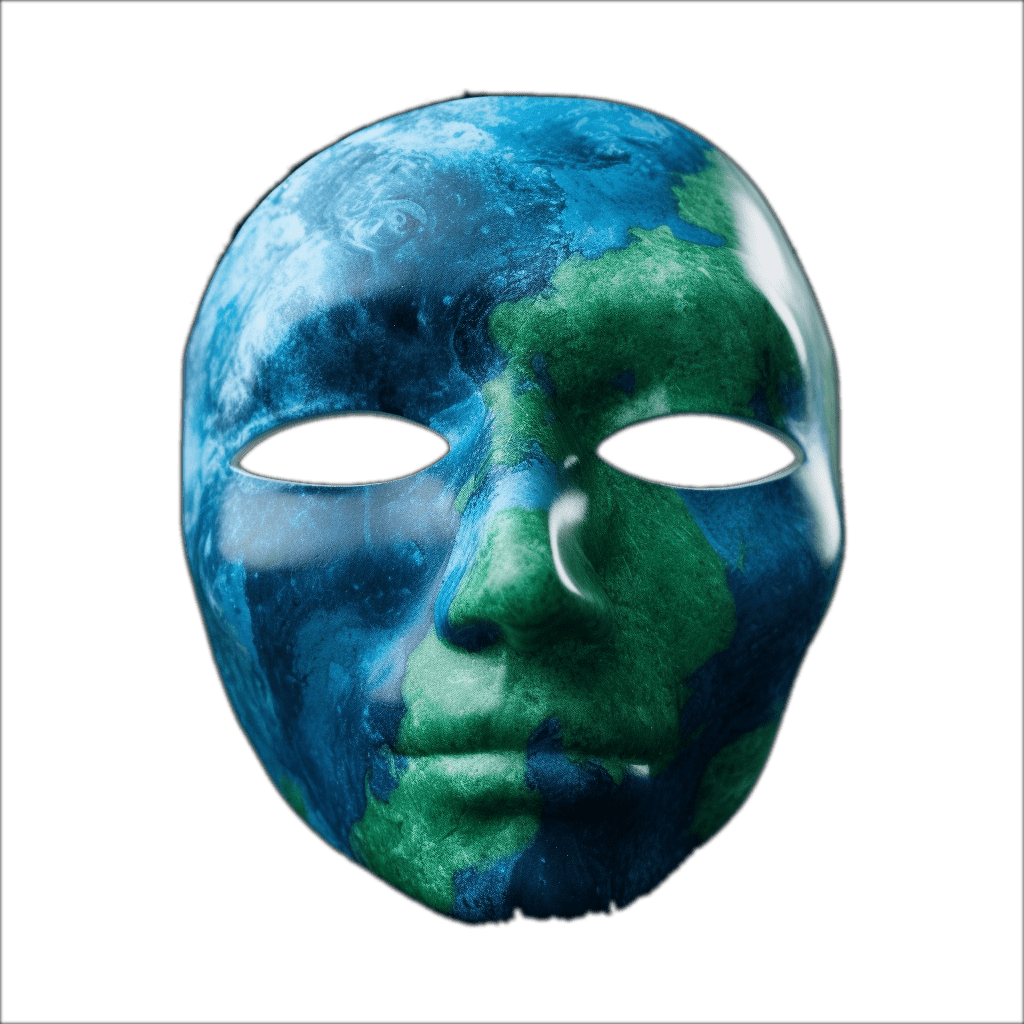
As impersonation and deception become increasingly challenging issues, we will require millions of distinct personas for AGI. I refer to these personas as “masks,” which serve various purposes in the context of AGI alignment.
To enable an AGI to self-improve, a single AI system must employ multiple masks, each representing a different role in decision-making. Many efforts are underway. [1]
[1] – See the work of Self Refine at https://selfrefine.info/. There is also https://github.com/torantulino/Auto-GPT , https://yoheinakajima.com/task-driven-autonomous-agent-utilizing-gpt-4-pinecone-and-langchain-for-diverse-applications/, and https://github.com/yoheinakajima/babyagi.
The necessity for an AI to converse with itself may stem from the fact that large language models (LLMs) act as a form of knowledge compression. In this though experiment, prompts serve as keys for decompression. However, a single key might not be sufficiently expressive for a complex, iterative process.
Research on multi-agent systems has demonstrated instances of emergent intelligence, which arise from the interaction of independent behaviors. Examples of such systems include flocking behavior in birds, ant colonies, and stock market dynamics, where the collective intelligence emerges from the interplay of numerous agents.
Distributing a context window across an explore/exploit paradigm could be one way to approach AGI alignment. A single agent might not possess a sufficiently large or well-tuned context window to simulate the entire system effectively.
To illustrate how multi-agent systems can express emergent intelligence over time, consider the Lotka-Volterra predator-prey model. In this mathematical model, the populations of predators and prey evolve over time, influencing each other’s growth rates. This dynamic interaction ultimately leads to an emergent, cyclical pattern of population changes.
In the context of genetic algorithms, the concept of multiple masks can be interpreted as representing different individuals within a population, each with its unique set of traits or characteristics. Genetic algorithms are a class of optimization techniques inspired by the process of natural selection in biology. They seek to find the best solution to a problem by evolving a population of candidate solutions over multiple generations.
When applying the mask concept to genetic algorithms, each mask can be thought of as an individual solution with a particular set of features, or a “genome.” These masks interact with one another through processes analogous to biological evolution, such as selection, crossover (recombination), and mutation.
In the selection process, masks that perform better according to a predefined fitness function are more likely to be chosen for reproduction. Crossover occurs when two selected masks exchange parts of their genomes, creating new offspring with a combination of traits from both parents. Mutation introduces small, random changes to the offspring’s genomes, promoting diversity within the population.
The iterative nature of genetic algorithms allows for the exploration of a vast solution space, as each new generation of masks potentially brings improvements and innovations. The simultaneous presence of multiple masks enables the algorithm to explore various regions of the solution space and avoid premature convergence to a suboptimal solution.
In summary, the concept of multiple masks in genetic algorithms helps facilitate the search for optimal solutions in complex problem domains. By simulating the evolutionary process, genetic algorithms can harness the power of diversity and adaptation to tackle challenging optimization tasks, which could offer valuable insights for AGI alignment.
Anthropology offers fascinating examples of how masks can be used to convey complex narratives with a limited number of actors. One such example can be found in the traditional Japanese Noh theater, which has been performed for over six centuries. Noh plays often explore profound themes, such as human emotions, moral dilemmas, and supernatural phenomena, through a combination of dance, music, and poetry.
In Noh theater, actors wear intricately designed masks to portray various characters, each with their unique personality and backstory. A single actor may don multiple masks throughout a performance, thereby representing multiple characters with distinct roles in the narrative. The masks serve to amplify the emotional depth and complexity of the story while enabling a small group of actors to tell intricate and multilayered tales.
This concept of using masks in traditional storytelling can be applied to AGI alignment, where multiple “masks” or personas are employed by a single AI system to facilitate self-improvement and decision-making. By drawing inspiration from the rich history of mask usage in human culture, we can explore innovative ways to tackle the challenges of aligning AGI with our values and intentions.
Understanding these concepts may enable us to build AGI alignment from the outside in. By considering the roles of multiple agents and leveraging their emergent intelligence, we can potentially create a framework for aligning AGI with human values and intentions.


Starting up with Purpose
It’s not news here in San Francisco, in the most dominant region of the Silicon World – I’m creating a company. I have built a prototype. I’ve tested with users. I’m no miracle worker, and there’s a long, long way to go. And I’ve got just a couple of months to get off the ground.
What makes it worthwhile is the mission.
End the Digital Divide
The Digital Divide will end. The question is “Why?”. Even with rapid, global smartphone growth and internet from the sky, there’s so much important work to be done to learn, educate and protect.
If we work very very hard, and are very very lucky, only a minuscule part of the world will progress because of our efforts. That part matters.
Starting a company, especially as a parent, isn’t for the faint of heart. I would be grateful for your feedback and support. Reach out to startup@hai.io, follow at @humanassisted or me @hendler
“Soon the digital divide will not be between the haves and the have-nots. It will be between the know-hows and the non-know-hows.” – Howard Rheingold
Artificial Intelligence
A variety of slightly curated youtube videos on the topic of AI.
Ethics, Thinking
Integration with Human Work
Deep Learning
Future
More about HAI
For a few weeks I’ve been having meetings with advisors and colleagues. For those I’ve not been meeting, I’ve fallen behind in communicating what I’m working on.
Not a stealth startup, but there’s also a lot that’s yet to be determined. I’d prefer to be open, but there are some specifications that I’ll keep under wraps for a variety of reasons…. When building a stealth aircraft, at the least you can tell people that you are building an aircraft. Skunkworks doesn’t make sandwiches.
Company vision and culture will be in large part determined by cofounders. Here’s where there’s some definition:
- HAI means AAI (Artificial Artificial Intelligence) – humans intelligence built into a process that’s usable by computer intelligence
- Ethical prime directives. See Friendly AI
- a sustainable business model early on
- Company culture of sustainable innovation modeled after Google’s large revenue generating platform supporting R&D.
- large, very talented, diverse founding team. Diversity is a no-brainer. Large is about five people; I’d rather create value from equity by distributing to founders than funders.
- Boston still has untapped talent and potential. Even if developers can find jobs easily, what kind of job would an engineer want for the rest of their life?
 Jonathan Hendler